When we think about healing from childhood trauma, we often focus on the obvious wounds, the visible scars, the memories that wake us at night, the relationships that falter under the weight of unspoken pain. But beneath these surface injuries lie two profound casualties: our ability to trust and our capacity to set boundaries.
For many survivors, the journey toward healing begins with a single question: How do I learn to trust again when the people who were supposed to protect me became the source of my deepest wounds?
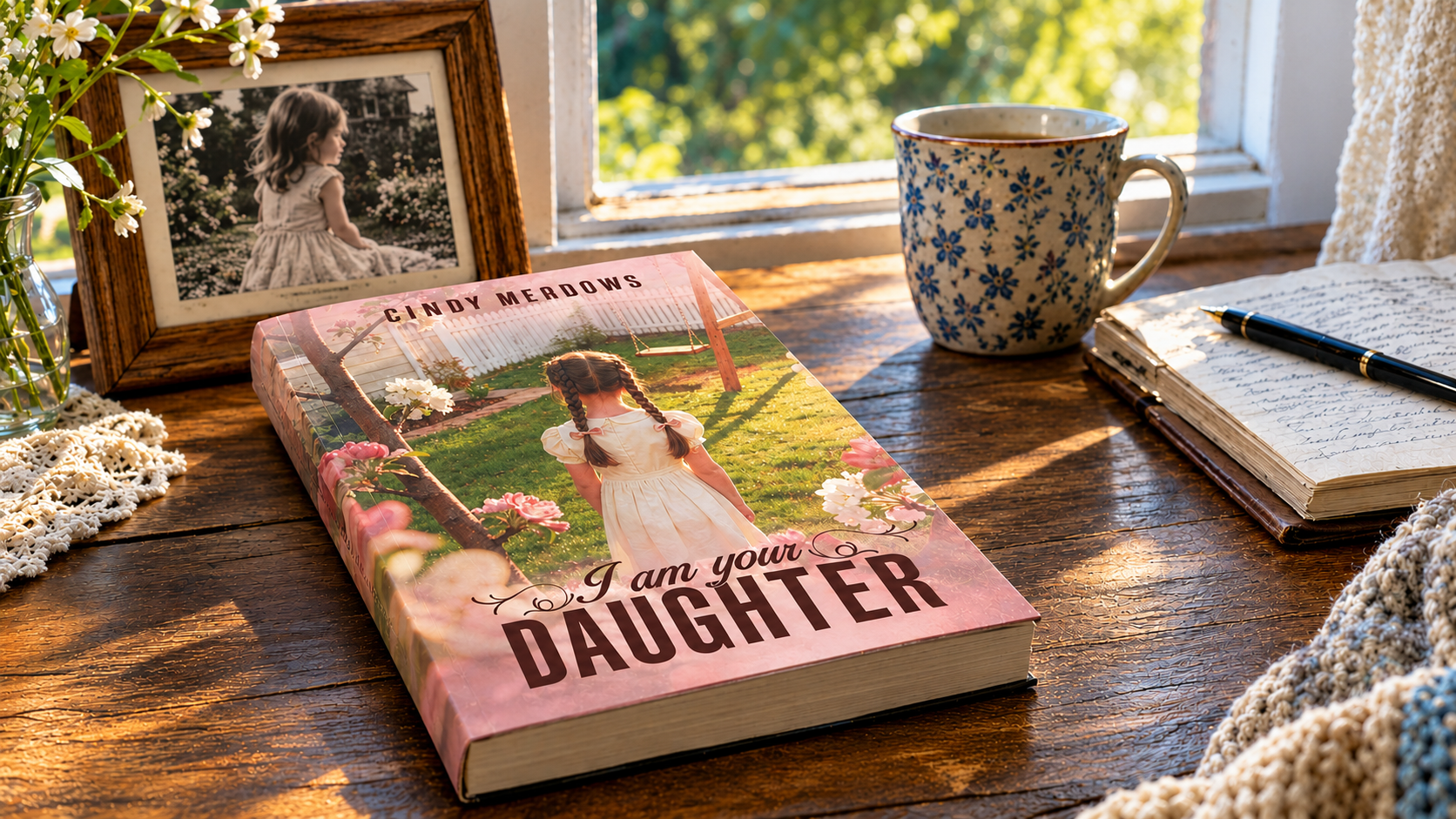
This is where books about trust and boundaries after trauma become invaluable companions. They offer more than information; they provide validation, language for experiences we couldn't name, and a roadmap for rebuilding what was broken. Among the most powerful of these narratives is Cindy Meadows' memoir, I Am Your Daughter, a searing account of growing up in a family where love and harm coexisted, and the long road toward reclaiming one's voice.
Understanding Trust: What It Means and Why It Matters
Trust is the foundation upon which all human connections rest. It is the belief that another person will act with your best interests at heart, that they will be reliable, honest, and safe. For children, trust is not a choice but a necessity. We are born dependent on caregivers, biologically wired to seek comfort, protection, and love.
When that trust is honored, we develop what psychologists call "secure attachment," the ability to form healthy relationships, regulate emotions, and believe in our own worth. But when trust is violated, especially by those closest to us, the consequences ripple across decades.
In I Am Your Daughter, Cindy Meadows captures this violation with painful clarity. From the earliest pages, we see a child who loves her father deeply, who waits for his hugs, who craves his approval. And yet, the same hands that offer comfort also inflict harm. The same father who carries her to bed after she falls asleep in the car also violates her in ways that leave her confused, ashamed, and silent.
This duality, the coexistence of love and abuse, is what makes trust so difficult to rebuild. How do you trust anyone when your first experience of trust was betrayed?
The Difference Between Blind Trust and Healthy Trust
Many survivors struggle not only with trusting others but with understanding what healthy trust actually looks like. They may swing between two extremes: blind trust (giving everyone access to their inner world, only to be hurt again) and complete mistrust (walls so high that no one can get close).
Blind trust is what children offer instinctively, unquestioningly, and absolutely, and it is dangerous when given to the wrong people. Healthy trust is different. It is earned over time, built through consistent actions, and includes the ability to say no when something feels wrong.
Cindy Meadows' memoir illustrates this distinction poignantly. As a child, she trusted blindly, believing her father when he said their "special secret" was a way of showing love, trusting her mother to protect her, and believing her brother would walk her safely to school. Each of these trusts was violated.
But as she grows, we see her begin to develop something closer to healthy trust, in her friendship with Marsha, in her confessions to her grandmother, in her sessions with the school counselor. These relationships, built slowly and tested carefully, show that trust can be reconstructed, not naively, but wisely.
Understanding Boundaries: The Invisible Lines That Protect Us
Boundaries are the invisible lines that define where we end, and others begin. They protect our time, our bodies, our emotions, and our values. For children raised in healthy environments, boundaries are taught implicitly, through respect for privacy, through the honoring of a "no," through the modeling of appropriate behavior.
But in homes where trauma occurs, boundaries are systematically destroyed. Children learn that their bodies are not their own, that their feelings are unimportant, and that their "no" will not be heard. I Am Your Daughter offers numerous examples of boundary violation:
- The neighbor who places his hand on her leg and squeezes
- The father who removes her clothing in a field
- The brother who breaks her nose and is minimally punished
- The mother who reads her private notebook
Each violation teaches her a lesson: Your boundaries do not matter. You do not have the right to say no. This is the legacy of childhood trauma, the belief that we are not entitled to protection, that setting limits is selfish or dangerous.
For more reading, see our blog "Books About Childhood Trauma and Healing: Stories of Recovery and Hope."
How Childhood Trauma Affects Your Ability to Trust
Childhood trauma fundamentally alters a person's capacity to trust. When the very people who should provide safety and protection become the source of harm, a child's worldview shatters. Trust becomes dangerous, vulnerability becomes weakness, and the nervous system stays locked in survival mode. Here is how abuse distorts trust:
1. When the People Who Should Protect You Become the Threat
Childhood abuse betrays a child's core survival instinct, trusting caregivers. When those caregivers cause harm, the child's foundation shatters. In I Am Your Daughter, Cindy Meadows' father is both protector and predator, her mother both caretaker and enabler. No one is safe, forcing survival strategies, hypervigilance, people-pleasing, and self-suppression that follow her into adulthood.
2. Learning That Adults Cannot Be Trusted
Abused children learn that adults are unpredictable, dangerous, or indifferent. The result is a hyper-independent child who trusts no one fully and expects betrayal at every turn. She captures this through her recurring fear of "the man in my room," symbolizing her belief that she is never truly safe.
3. The Fear of Being Hurt Again
The most persistent obstacle to healing is the fear of re-injury, a visceral aversion to vulnerability rooted in experience, not paranoia. Cindy Meadows' memoir shows this pattern clearly: even as she falls in love with Dave and enters marriage, she holds back. The past does not stay buried; it echoes.
4. Hypervigilance: When Your Body Stays on Guard
Trauma rewires the nervous system, leaving survivors in chronic hypervigilance, scanning for threats, unable to relax, waiting for the other shoe to drop. Throughout I Am Your Daughter, she describes this without naming it: her "brain hurt," her "deep breaths," her reliance on structure and routine, all signs of a nervous system stuck in survival mode.
5. Difficulty Trusting Your Own Perceptions
One of trauma's most insidious effects is the erosion of self-trust. When adults deny your experience, saying "that didn't happen" or "you're overreacting," you stop trusting your own perceptions and wonder if you are the problem. This is gaslighting's damage. Cindy Meadows constantly questions herself: Was she overreacting? Was the abuse her fault? Should she have avoided her father when he drank? These questions are the residue of having her reality denied.
Why Trust and Boundaries Are So Hard to Rebuild
For books about rebuilding trust after trauma, the central question is: How do we move forward when the past keeps pulling us back? The answer is neither simple nor quick. Rebuilding trust and boundaries requires:
- Acknowledgment: Naming what happened and accepting that it was wrong
- Validation: Having at least one person believe and support you
- Practice: Slowly, deliberately testing trust with safe people
- Self-compassion: Forgiving yourself for the coping mechanisms you developed
- Time: Recognizing that healing is not linear and cannot be rushed
Cindy Meadows' memoir is powerful precisely because it doesn't offer easy answers. It shows a protagonist who is still healing, still learning, still making mistakes. This honesty is what makes it one of the best books about trust after trauma 2026, it meets survivors where they are.
Signs You Have Trust and Boundary Issues from Childhood Trauma
How do you know if childhood trauma has affected your ability to trust and set boundaries? Consider these signs:
- You avoid intimacy, even when you crave connection
- You say yes when you want to say no
- You feel responsible for others' emotions
- You are either fiercely independent or overly dependent
- You have difficulty identifying your own needs
- You feel guilty when you set limits
- You second-guess your instincts
- You attract relationships that repeat old patterns
In I Am Your Daughter, she exhibits many of these signs. She is parentified, responsible for cooking, cleaning, and caring for her family. She says yes to her father's abuse, her brother's demands, her mother's dependence. She rarely identifies her own needs. This is the legacy of childhood trauma. But it is not the end of the story.
Boundaries with Family Members Who Hurt You
For books about setting boundaries after trauma, one of the most challenging issues is navigating family relationships. How do you set boundaries with the people who hurt you, especially when they are your parents, siblings, or relatives?
The answer is deeply personal. Some survivors choose estrangement; others choose limited contact; still others work toward reconciliation when the abuser has genuinely changed.
Cindy Meadows' memoir shows the complexity of these decisions. She continues to love her father even after his abuse. She maintains a relationship with her brother despite his violence. She cares for her mother even when her mother cannot care for her. This does not mean she has healthy boundaries; it means she is navigating impossible choices with the tools she has.
For books about personal boundaries and healing, the message is clear: boundaries are not about punishment. They are about protecting yourself. You can love someone and still say no. You can forgive and still maintain distance. You can honor your parents and still protect yourself.
How to Begin Setting Boundaries After Trauma
If you recognize yourself in her story, if you struggle with trust and boundaries, here are some places to begin:
- Start small: Say no to something that doesn't matter, and notice how it feels.
- Use "I" statements: "I feel uncomfortable when you do that" is more effective than "You always do this."
- Expect pushback: People who benefited from your lack of boundaries will resist.
- Get support: This is nearly impossible to do alone.
- Be patient with yourself: Setting boundaries is a skill; it takes practice.
- Celebrate progress: Every small boundary is a victory.
Practical Exercises for Building Trust and Boundaries
To complement your reading of books about trust and boundaries after trauma, try these exercises:
- The Trust Ladder: Make a list of people in your life. Rank them from 1 (most trusted) to 10 (least trusted). Notice where you feel safe and where you don't. This awareness is the first step.
- The Boundary Script: Write out a simple phrase you can use when you need to set a limit: "I'm not comfortable with that." Practice saying it aloud.
- The Body Check: When you're with someone, notice how your body feels. Do you tense up? Relax? Your body knows what your mind may not.
- The Journal Practice: Write about a time someone violated your boundaries. What did you feel? What did you wish you had done? This helps you identify patterns and practice new responses.
- The Self-Compassion Break: When you struggle, place your hand on your heart and say: "This is hard. I'm doing the best I can. I deserve care."
For more reading, explore our blog "Books About Childhood Abuse and Family Secrets: Stories of Silence and Healing."
Conclusion
Healing from childhood trauma is not a linear journey. There are setbacks, revelations, and moments of profound clarity. Books, especially memoirs like I Am Your Daughter by Cindy Meadows, can serve as companions along the way. They remind us we are not alone, that others have walked this path, and that healing is possible.
For readers seeking books about trust and boundaries after trauma, this memoir is an essential addition to your library. Among the best books about trust after trauma 2026, it offers not answers but presence, a voice that says, "I see you. I believe you. You are not alone."
In the end, trust and boundaries are not about walls. They are about worthiness, the belief that you deserve safety, respect, and love. That belief was stolen from you. But it can be reclaimed.
Frequently Asked Questions
How did Cindy Meadows' childhood experiences affect her ability to trust others?
She learned early that the people closest to her could not be trusted. Her father abused her, her mother failed to protect her, and her brother bullied her relentlessly. As a result, she became hypervigilant, expected betrayal, and struggled to let anyone close.
How did counseling help Cindy Meadows establish boundaries with her father?
Her school counselor, Mrs. Sanders, validated her experience and helped her understand that the abuse was not her fault. Through their sessions, she learned that she had the right to protect herself. She began keeping her distance from her father, spending time in her room, and avoiding situations where she might be vulnerable to him again.
How did Cindy Meadows learn to trust herself and her own decisions?
Writing in her notebook became her primary tool for self-trust. By recording her thoughts and feelings, she validated her own perceptions, something her family rarely did. Counseling reinforced this by confirming that her instincts were correct.
How did Cindy Meadows' past experiences influence her relationship with Dave?
Her trauma made it difficult for her to trust Dave fully. She held back emotionally, feared vulnerability, and struggled with intimacy even after marriage. When Dave accused her of being unfaithful on their wedding night, she was shocked and confused, but she also recognized her pattern of silence.
How did Cindy Meadows' concerns about her parents' marriage affect her views on married life?
Watching her parents' dysfunctional marriage, marked by fighting, silence, and her father's drinking, left her both fearful and determined. She worried her marriage would repeat their patterns. At the same time, she hoped marriage would give her the love and stability she never had.
What happens next to Cindy Meadows? There's only one way to find out: get your copy of I Am Your Daughter on Amazon and uncover her full story today.