Every family has its secrets. Some are small, a surprise birthday party, a hidden Christmas gift, a piece of news withheld until the "right time." But some secrets are devastating. They live in the walls of a home like ghosts, shaping the lives of everyone inside. These are the secrets of abuse, neglect, violence, and betrayal, secrets that children are told to keep, secrets that become part of who they are before they even have words for what happened.
Books about childhood abuse and family secrets give voice to experiences that are often silenced. They break the unspoken rules of "what happens in this house stays in this house." They show survivors that they are not alone. And they help readers understand the complex, painful, and deeply human reality of growing up in a home where love and harm exist side by side.
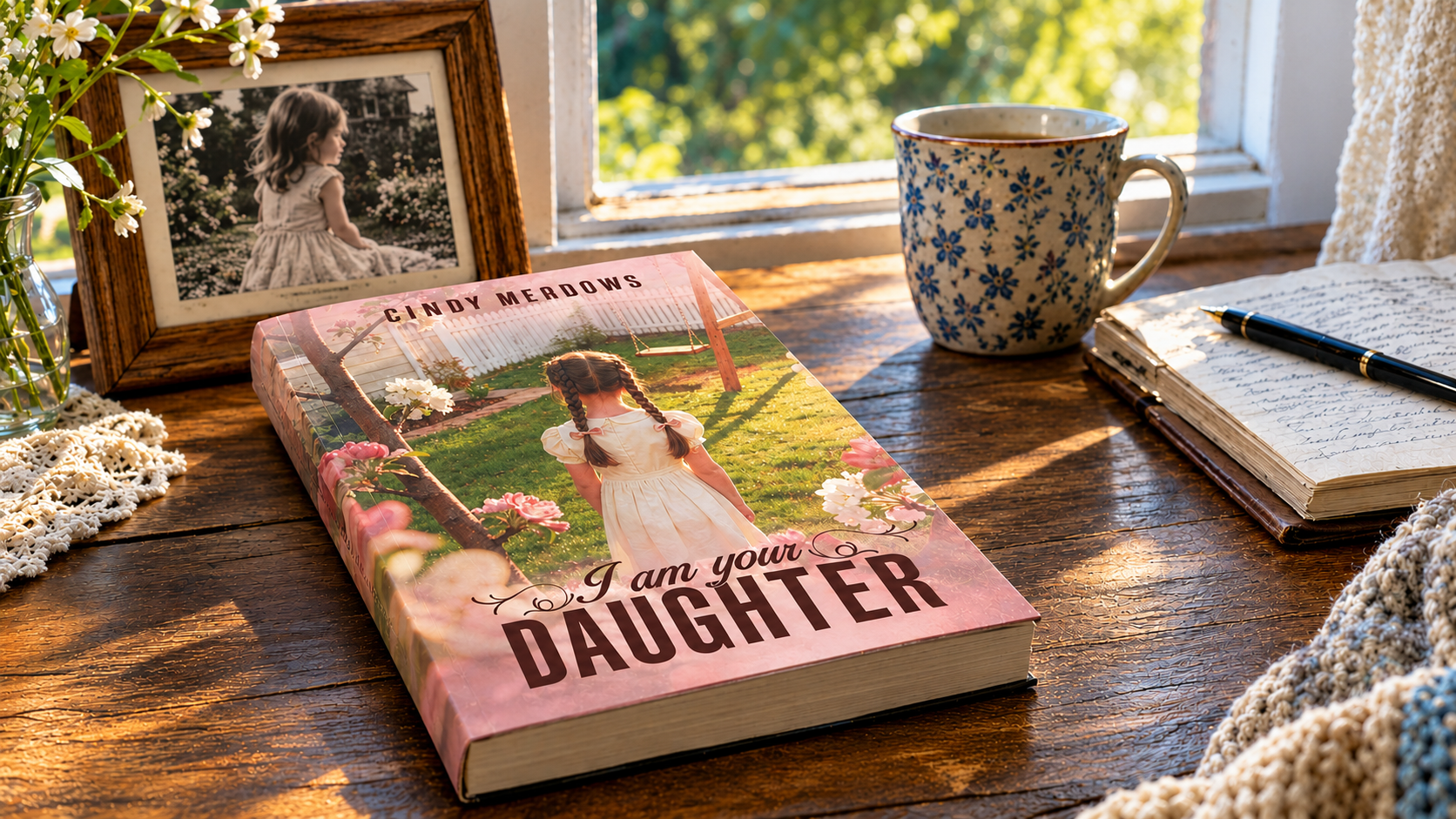
One such book is I Am Your Daughter by Cindy Meadows, a memoir that chronicles a young girl's journey through the hidden abuse and family secrets of a mid-century American household. Through her eyes, readers witness the slow unraveling of a family's façade and the long, difficult path toward healing.
This blog explores the hidden dynamics of family secrets, the many forms childhood abuse can take, and how books, like I Am Your Daughter, can serve as both mirrors and maps for those who have lived through similar experiences.
What Are Family Secrets? Understanding the Hidden Dynamics of Abuse
Family secrets are more than withheld information; they are a system of silence, unspoken rules governing what can be said and what must be denied. In abusive families, secrets protect the abuser and isolate the victim. Children rarely hear explicit instructions to stay silent. Instead, they learn through subtle cues, a mother's averted gaze, a father's warning look, and tension when certain topics arise. The child internalizes: This is dangerous. This is shameful. This is your fault.
In I Am Your Daughter, Cindy Meadows captures this dynamic with devastating clarity. After her father sexually abuses her, he says simply, "Don't tell your mom." She carries the secret alone, scrubbing her skin, hiding evidence, pretending to sleep. Books about hidden family abuse, like this memoir, show how secrets become embedded in a child's identity. She doesn't just experience abuse; she learns to expect it and believe she deserves it.
Why Books About Childhood Abuse and Family Secrets Matter
For those who have lived through abuse, books about childhood abuse and family secrets can be lifelines. They offer validation, the recognition that what happened was real and wrong. They offer community, the knowledge that others have walked similar paths. They offer hope, the possibility of healing.
For readers who haven't experienced abuse, these books offer understanding. They challenge myths that abuse only happens in "bad" families, that victims are weak, and that children simply "get over it."
I Am Your Daughter is particularly valuable because it doesn't sensationalize abuse. It shows the quiet, cumulative ways secrets shape a childhood. Cindy Meadows' story isn't one of dramatic escapes; it's small moments: the smell of beer, the weight of a body, the guilt that follows. It shows how a child learns to smile through pain and pretend everything is fine. Books about family trauma secrets like this remind us that healing begins with truth-telling. When secrets are spoken, isolation breaks.
The Architecture of Silence: How Families Keep Secrets
Families are systems that develop mechanisms to maintain equilibrium. When abuse occurs, the family's primary goal is often not to protect the victim but to protect the secret. This requires an elaborate architecture of silence.
- Denial: Abuse is minimized or denied. A father who touches his daughter is just "being affectionate." A mother who looks away is "keeping the peace." In Cindy Meadows' book, her mother tells her to "listen to your dad" when she tries to express her feelings.
- Blame: The victim is accused of lying, exaggerating, or provoking the abuse. She is called "negative" for expressing sadness and grounded disproportionately for minor infractions.
- Enmeshment: Boundaries blur. Children meet adults' emotional needs. Cindy Meadows cooks, cleans, and cares for her mother, becoming the peacekeeper. Leaving feels like betrayal.
- Isolation: Families present a perfect image while keeping relationships shallow. The fighting, drinking, and abuse happen behind closed doors.
In I Am Your Daughter, these mechanisms operate for decades. The silence isn't broken until she seeks help from a school counselor, and even then, she begs her not to tell. The architecture of silence is strong. It takes years of small courage to dismantle it.
How Childhood Trauma Affects Adult Relationships
The effects of childhood trauma do not end when childhood ends. They carry into adulthood, shaping how survivors see themselves, how they relate to others, and how they navigate intimacy, such as:
1. Trust Issues and Difficulty with Intimacy
Children raised with secrets learn that trust is dangerous, that love and betrayal coexist. In I Am Your Daughter, her first sexual experience with her husband brings accusation instead of tenderness. Intimacy becomes a minefield; vulnerability feels like weakness; trust feels like a trap.
2. The Cycle of Repeating Patterns
Survivors often find partners who mirror childhood dynamics, controlling, unavailable, or abusive, or repeat roles like caretaker and peacekeeper. Cindy Meadows' marriage begins with hope but carries familiar patterns. Breaking the cycle requires awareness, support, and years of healing.
3. Mental Health Struggles: Anxiety, Depression, PTSD
Survivors face higher risks of anxiety, depression, and PTSD. Her anxiety runs throughout the memoir, worrying about her parents' fights, her grades, and her future. She has trouble sleeping and feels "tired" after gatherings. These are symptoms of chronic trauma, not ordinary childhood stress.
4. Identity Confusion and Self-Blame
Children with secrets struggle with identity: Who am I if my family isn't what it seemed? Cindy Meadows wonders why her father hurts her and why her mother doesn't protect her. She wonders if she's to blame. Self-blame is one of abuse's most insidious effects, and hardest to overcome.
5. Difficulty Setting Boundaries
Children from boundary-violating homes struggle to set boundaries as adults, saying yes when they mean no, and tolerating mistreatment. Her journey toward boundaries is central in I Am Your Daughter. With a counselor's help, she learns her father's behavior was wrong, and she has the right to protect herself.
If you wanted to learn more insight into this topic, visit our blog "Books About Trust and Boundaries After Trauma: A Journey Toward Healing."
The Many Faces of Childhood Abuse Hidden Behind Closed Doors
Childhood abuse takes many forms, and it often occurs simultaneously. In I Am Your Daughter, we see multiple forms of abuse operating in the same household, such as:
1. Physical Abuse: When Love Leaves Bruises
Physical abuse is often visible yet hidden. In the memoir, her father uses a razor strap on her brother; her brother breaks her nose; her father hits her mother. Physical abuse is about power, teaching children that violence is acceptable, and love and harm coexist.
2. Emotional Abuse: The Wounds That Don't Show
Emotional abuse is harder to see but equally damaging: criticism, humiliation, rejection, manipulation. Cindy Meadows' mother says she's "too young" to understand love; her brother calls her "geek" and "dork"; her father dismisses her feelings. Repeated over the years, these messages become internalized: her feelings don't matter, her voice doesn't count.
3. Sexual Abuse: The Secret That Shames the Innocent
Sexual abuse is the most guarded family secret. In I Am Your Daughter, the neighbor, Mr. Jerry, touches Cindy Meadows inappropriately, and her father dismisses it. Later, her father sexually abuses her, telling her to keep it secret. She scrubs her skin, hides evidence, and blames herself, carrying shame that was never hers to bear.
4. Neglect: The Absence That Speaks Volumes
Neglect is the absence of care, physical, emotional, or educational. Her mother works night shifts; her father disappears to the bar; she's left to cook, clean, and care for herself and her brother. Her parents provide materially but are emotionally unavailable. She essentially raises herself.
5. Witnessing Abuse: The Children Who See Too Much
Children who witness abuse are also victims, experiencing fear, helplessness, and grief. Cindy Meadows witnesses her father hitting her mother, hears their fights, and sees the bruises. She learns to smile through it, pretend everything is fine, and keep the secret.
How Family Secrets Affect Children into Adulthood
The effects of family secrets and childhood abuse ripple into adulthood in countless ways. In I Am Your Daughter, we see these effects unfold across the author's life:
1. Trust Issues and Difficulty with Intimacy
She struggles to trust her parents, her brother, her boyfriends, and her husband. She is hypervigilant, always watching for signs of danger. She pulls away when her father hugs her because she smells beer on his breath. She wonders if her husband is angry when he turns away.
2. The Cycle of Repeating Patterns
Her marriage begins with hope, but there are warning signs. Her husband accuses her of not being a virgin. He is angry on their wedding night. She wonders if her future will look like her parents'. The cycle is not inevitable, but it is powerful, and breaking it requires awareness and healing.
3. Mental Health Struggles: Anxiety, Depression, PTSD
Her anxiety is a constant companion. She worries about her parents, her grades, and her relationships. She has trouble concentrating. She feels tired after social events. These are signs of trauma, and they follow her into adulthood.
4. Identity Confusion and Self-Blame
She wonders who she is and where she belongs. She is "the good daughter," "the peacekeeper," "the one who keeps the family together." But she is also angry, sad, and confused. She blames herself for the abuse and wonders if she is somehow at fault.
5. Difficulty Setting Boundaries
Cindy Meadows learns to set boundaries slowly, with the help of a counselor and a friend. She learns to keep her distance from her father. She learns to say no. She learns to prioritize her own well-being. This is a long process, and it is not complete by the end of the memoir, but it has begun.
The Role of Mothers in Family Secrets
In families where abuse occurs, mothers occupy a complicated position. They are often both victims and enablers. They may be abused themselves, and they may also look the other way when their children are abused.
In I Am Your Daughter, Cindy Meadows' mother is a complex figure. She works hard. She cooks and cleans. She maintains a beautiful home. But she is also emotionally unavailable, dismissive of her feelings, and complicit in the family's secrets.
When she tries to tell her about the neighbor's inappropriate touch, her mother tells her to listen to her father. When her father abuses her, her mother does not know, but she has created an environment where she does not feel safe telling her.
This is not to blame Cindy Meadows' mother. She is also a victim of her husband's abuse. But the memoir shows how abuse is cyclical, how victims can become enablers, how silence is passed down through generations.
How to Support Someone Living with Family Secrets
Supporting someone who is living with family secrets and abuse requires patience, empathy, and a willingness to listen without judgment.
- Believe them. When someone tells you they're being abused, believe them. Don't question their story or ask what they did to provoke it.
- Listen without pushing. Let them share at their own pace. Don't pressure them to reveal more than they're ready to.
- Validate their feelings. Tell them what happened was wrong, that they're not to blame, and that their feelings are valid.
- Offer practical support. Help them find resources, counselors, support groups, and hotlines. Offer to attend appointments with them. Help them create a safety plan if they're still in danger.
- Respect their choices. Leaving abuse takes time, planning, and courage. Respect their decisions, even if you don't understand them.
- Take care of yourself. Supporting a trauma survivor is difficult. Make sure you have your own support system.
The Role of Therapy in Healing from Family Secrets and Abuse
Healing from childhood abuse and family secrets is not a linear process. It takes time, support, and often professional help.
In I Am Your Daughter, the author begins therapy with a school counselor after her father abuses her. The counselor listens, validates her feelings, and helps her understand that what happened was not her fault. She also teaches her about boundaries and self-care. Therapy can help survivors:
Understand their experiences. Therapy provides a safe space to explore what happened and how it has affected them.
Develop coping skills. Therapy teaches strategies for managing anxiety, depression, and triggers.
Set boundaries. Therapy helps survivors learn to say no, to protect themselves, and to prioritize their own needs.
Break the cycle. Therapy helps survivors recognize patterns and make different choices.
Heal relationships. Therapy can help survivors build healthier relationships with themselves and others.
Healing is not about forgetting. It is about integrating, learning to carry the past without being defined by it.
For more trauma-informed insights and healing strategies, read "Books About Childhood Trauma and Healing: Stories of Recovery and Hope."
Conclusion
Books about childhood abuse and family secrets, like I Am Your Daughter by Cindy Meadows, are more than just stories. They are acts of courage. They are declarations that silence will not win. They are invitations to healing.
Her memoir shows us the many faces of abuse, physical, emotional, sexual, neglectful, and the many ways that families keep secrets. It shows us how secrets shape children and how those effects carry into adulthood. But it also shows us the possibility of healing. Through therapy, friendship, faith, and her own resilience, she begins to find her way.
Best books about childhood family secrets 2026 will continue to tell these stories. They will continue to break the silence. They will continue to offer hope. If you are living with family secrets, know this: You are not alone. What happened to you was not your fault. And healing is possible.
Frequently Asked Questions
How did family secrecy affect Cindy Meadows' childhood experiences at home?
She learned to silence her feelings and keep painful secrets from a young age. The unspoken rule was "what happens in this house stays in this house." She smiled through hurt, did her chores, and pretended everything was fine, even when it wasn't.
What did Cindy Meadows experience when her father's behavior made her feel uncomfortable?
She felt confused, scared, and ashamed. After her father's abuse, she scrubbed her skin, hid evidence, and kept the secret. She loved her father but knew something was wrong, yet she blamed herself and feared speaking out.
How did Cindy Meadows react to the unspoken problems within her family?
She internalized the tension, becoming a peacekeeper and caretaker. She found solace in nature, painting, and writing in her notebook. She rarely confronted her family directly, instead pulling away when she felt unsafe.
What did Cindy Meadows observe about her mother's experiences in her parents' marriage?
She saw her mother as both victim and enabler. Her mother worked hard, maintained the home, but also looked the other way. She witnessed her mother's bruises, heard her parents fight, and watched her mother dismiss her own pain.
How did Cindy Meadows' family environment affect her ability to speak openly about her feelings?
She learned that her feelings didn't matter. She was told to "be happy" and "listen to your dad." She kept secrets, feared judgment, and struggled to trust. It wasn't until she spoke to a counselor that she began to break the silence.
Cindy Meadows' story will stay with you long after the last page. But you've only heard part of it. Get your copy of I Am Your Daughter on Amazon now and uncover the full story today.