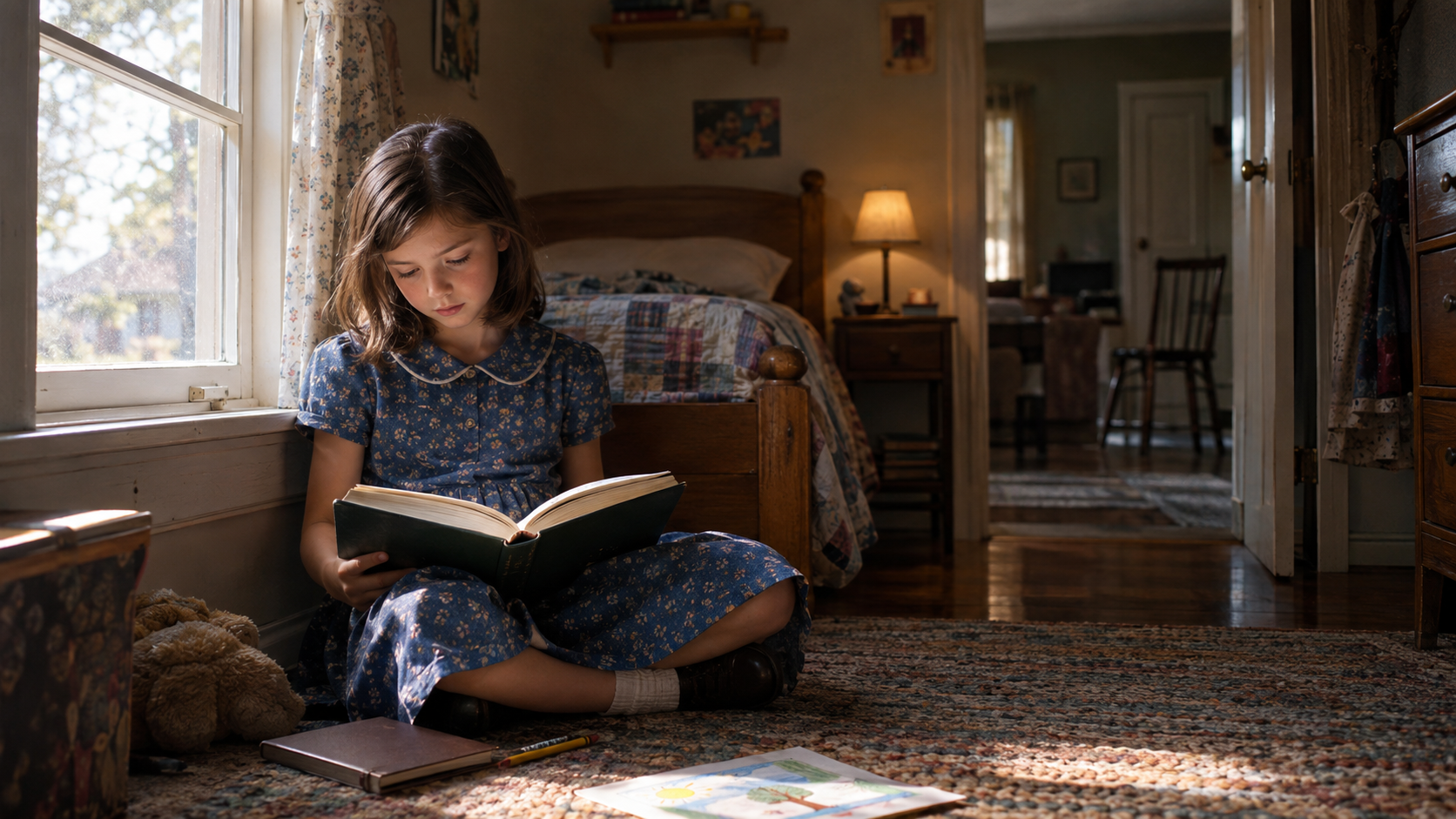
Childhood trauma leaves wounds that often remain invisible to the outside world. A child who experiences abuse, neglect, violence, or profound emotional pain may appear to function normally, going to school, playing with friends, participating in family gatherings, while carrying an internal burden that shapes every aspect of their development. For parents, caregivers, and survivors themselves, understanding the nature of childhood trauma and the pathways toward healing is essential. Books about childhood trauma and healing offer a unique window into these experiences, providing validation, insight, and hope for those affected.
In this blog, we explore childhood trauma through the lens of one powerful memoir: I Am Your Daughter by Cindy Meadows. This childhood trauma healing memoir takes readers on an intimate journey through the eyes of a young girl growing up in a household that appeared perfect from the outside but harbored deep dysfunction within. Through her story, we can understand the nature of trauma, why silence surrounds it, and how healing becomes possible.
What Is Childhood Trauma? Understanding the Invisible Wounds
Childhood trauma refers to experiences during the developmental years (typically birth through age 18) that overwhelm a child's capacity to cope and integrate the experience. These events can take many forms:
- Acute Trauma: Single, discrete events such as accidents, natural disasters, sudden loss of a parent, or a specific instance of violence or abuse.
- Chronic Trauma: Repeated, prolonged exposure to distressing events such as ongoing physical, emotional, or sexual abuse; domestic violence; neglect; or living with a parent who struggles with addiction or mental illness.
- Complex Trauma: The result of multiple, interconnected traumatic experiences, often beginning in early childhood and occurring within the child's primary caregiving relationships. Complex trauma profoundly affects a child's sense of self, ability to regulate emotions, and capacity to form healthy relationships.
The "invisible" nature of childhood trauma lies in its internal impact. Unlike a broken bone or a visible injury, trauma affects the developing brain and nervous system in ways that may not become apparent until years later. Children who experience trauma may:
- Become hypervigilant, constantly scanning for danger
- Struggle with emotional regulation, swinging between numbness and intense reactions
- Develop people-pleasing behaviors to avoid conflict
- Experience difficulty trusting others
- Blame themselves for the trauma
- Dissociate or "zone out" as a protective mechanism
- Struggle academically due to difficulty concentrating
- Experience physical symptoms like stomachaches or headaches
As the memoir I Am Your Daughter by Cindy Meadows illustrates, trauma often occurs within families that present a "normal" or even idealized exterior. The author describes a home with matching avocado appliances, abundant food, and extended family gatherings, yet beneath this surface lies parental conflict, emotional neglect, physical violence, and sexual abuse. This discrepancy between appearance and reality is a hallmark of many trauma survivors' experiences.
Why Books About Childhood Trauma and Healing Speak to the Soul
Books about childhood trauma and healing serve a unique function in the literary landscape. They offer something that clinical texts and self-help guides cannot: the lived experience of another human being, rendered in narrative form, and provide:
1. Validation and Recognition
For survivors, reading about someone who has experienced similar pain can be profoundly validating. The isolation that often accompanies childhood trauma, the sense that "no one understands" or "I am the only one," begins to dissolve when we encounter our experiences reflected in another's story. When Cindy Meadows writes about hiding her bloody underwear after her father's assault, or scrubbing her skin until it turned pink, survivors recognize themselves. This recognition carries its own healing power.
2. Making Meaning of Chaos
Trauma fragments experience. Memories become disconnected, emotions feel inexplicable, and the narrative of one's life loses coherence. Well-written trauma memoirs model the process of making meaning from chaos. They demonstrate how a survivor can piece together fragmented experiences into a coherent story, a story that acknowledges pain while also affirming resilience.
3. Hope Through Witness
Perhaps most importantly, books about overcoming childhood trauma offer hope. They show that healing is possible, that the effects of trauma need not be permanent, and that survivors can build meaningful, fulfilling lives. They provide what trauma researcher Judith Herman calls "witness," the act of bearing testimony that transforms private suffering into shared human experience.
The Long Silence: Why Victims Stay Quiet
One of the most striking features of I Am Your Daughter is the pervasive silence surrounding trauma. Cindy Meadows' father tells her after the first assault: "This is a secret just between you and me. If mom knew, then I would have to go away." This command to silence echoes through the entire memoir, shaping her relationships and her understanding of herself.
1. Fear, Shame, and Loyalty
Children who experience abuse often remain silent for complex, interconnected reasons:
Fear: Children fear that speaking up will lead to worse consequences, more violence, family breakup, or being blamed. Cindy Meadows' fear that "mom will blame me if I tell her" is tragically common among child abuse victims.
Shame: Children often internalize the belief that the abuse is their fault. They feel dirty, complicit, or fundamentally flawed. Her frantic washing after her father's assault, her hiding of her underwear, and her sense of embarrassment all reflect this internalized shame.
Loyalty: Despite the abuse, children typically love their abusers, especially when the abuser is a parent. She repeatedly expresses love for her father even as she describes his harmful behavior. She doesn't want him to "go away." This loyalty creates an impossible bind: speaking the truth feels like betrayal.
2. "What Happens in This House Stays in This House"
The Meadows family operates under an unspoken rule of secrecy. Cindy Meadows learned this rule early: "I learned from my mom that morning to smile and go on even when I felt hurt or sad inside." Later, she reflects: "I guess it goes back to hearing my mom and dad say what happens in this house stays in this house. Don't tell the neighbors."
This family code of silence is common in homes where abuse and dysfunction occur. It serves to protect the abuser and maintain the family's public image, but it does so at tremendous cost to the children.
3. The Cost of Speaking Up
When she finally does speak, telling a friend about her father's assault, speaking with a school counselor, she does so with enormous trepidation. She asks the counselor not to report: "Please don't. My mom doesn't know. It will only make matters worse at home." She knows instinctively that speaking the truth will disrupt the fragile equilibrium of her family.
The memoir honestly portrays this dilemma. Silence protects the family unit but perpetuates the trauma. Speaking up offers the possibility of help but risks destabilizing everything.
4. Why Children Blame Themselves
Throughout the memoir, Cindy Meadows blames herself for things that are not her fault:
- After her father's assault, she wonders if she "did something wrong"
- She feels guilty when her family life deteriorates, as if her needs caused the problems
- She believes her brother's bullying is deserved
This self-blame is developmentally normal for children, who are egocentric by nature and naturally assume they are the cause of events around them. In traumatic contexts, this tendency becomes dangerous, leading to a lifetime of misplaced guilt and shame.
5. The Moment Silence Finally Breaks
The memoir shows that breaking the silence is rarely a single dramatic moment. Instead, it happens gradually:
- She tells a friend about the abuse, receiving validation
- She speaks with a school counselor, who provides support
- She writes in her journal, giving voice to her feelings
- She finds moments of connection with trusted adults like her grandmother
- She eventually seeks professional help
Each small act of disclosure chips away at the wall of silence. For more reading, see our blog "Books About Childhood Abuse and Family Secrets: Stories of Silence and Healing."
How Childhood Trauma Affects Adult Relationships
The effects of childhood trauma often become most visible in adult relationships. Survivors may struggle with:
- Trust: Having been betrayed by those who were supposed to protect them, survivors may find it difficult to trust romantic partners, friends, or authority figures. Cindy Meadows' marriage begins with her husband accusing her of infidelity after their first sexual encounter, a manifestation of his own issues, but also a reflection of the trust deficits both carry.
- Intimacy: Physical and emotional intimacy may trigger traumatic memories or feelings of vulnerability. Survivors may avoid intimacy, dissociate during sexual experiences, or struggle to communicate their needs.
- Boundary Setting: Children who grew up in homes where boundaries were violated often struggle to establish and maintain healthy boundaries as adults. They may be either overly permissive or excessively guarded.
- Emotional Regulation: The nervous systems of trauma survivors are often dysregulated, either chronically activated (anxiety, hypervigilance) or chronically shut down (depression, numbness). This can lead to relationship conflicts marked by intense reactions or emotional unavailability.
- Repetition: Unconsciously, survivors may be drawn to partners who replicate the dynamics of their original trauma, a phenomenon sometimes called "repetition compulsion." The hope is that by replaying the scenario, they can finally master it. In reality, this often leads to revictimization.
How to Heal from Childhood Trauma: A Journey, Not a Destination
Healing from childhood trauma is not a linear process with a clear endpoint. It is better understood as a journey, sometimes meandering, sometimes circling back, but ideally moving toward greater integration, peace, and wholeness.
Stages of Healing
While everyone's path is unique, common stages include:
- Safety and Stabilization
The first task is establishing safety in one's environment, relationships, and body. This may involve leaving an abusive situation, building a support network, or learning basic grounding techniques to manage overwhelming emotions. - Remembering and Mourning
Once safety is established, survivors can begin to acknowledge and grieve what was lost: childhood innocence, trust, a sense of belonging. This stage often involves revisiting traumatic memories in a safe, supported way. - Reconnection
The final stage involves reconnecting with oneself, others, and a sense of meaning or purpose in life. Survivors learn to integrate their traumatic experiences into a coherent life narrative without being defined solely by trauma.
What Helps
Research and clinical experience suggest that healing is supported by:
- Therapeutic relationships: A trusted therapist can provide the consistent, safe attachment that was missing in childhood
- Support groups: Connection with others who share similar experiences reduces isolation
- Journaling and creative expression: Writing, art, and music provide outlets for processing
- Mind-body practices: Yoga, meditation, and other somatic approaches help regulate the nervous system
- Reading: Books about childhood trauma recovery offer validation, insight, and models for healing
- Self-compassion: Learning to treat oneself with the kindness and understanding one would offer a friend
What Hinders
Healing is hindered by:
- Ongoing exposure to abuse or unsafe environments
- Isolation and lack of support
- Self-blame and shame
- Substance use as a coping mechanism
- Invalidating responses when disclosing trauma
How Books About Childhood Trauma Help You Heal
Books about childhood trauma and healing offer several unique benefits:
1. Mirrors and Windows
Trauma literature functions as both "mirrors," reflecting the reader's own experience, and "windows," offering insight into experiences different from their own. For survivors, seeing their experience reflected in a memoir validates their reality. For supporters, reading about trauma builds empathy and understanding.
2. Reducing Isolation
The shame and secrecy surrounding childhood trauma can be profoundly isolating. Reading a childhood trauma healing memoir can break that isolation. As Cindy Meadows' memoir demonstrates, even a childhood that looked "normal" from the outside can contain hidden suffering.
3. Modeling Recovery
Memoirs of healing show that recovery is possible. They provide hope and demonstrate the strategies others have used to move forward.
4. Bibliotherapy
Some therapists use "bibliotherapy," prescribing specific books to support the therapeutic process. Reading about others' experiences can complement and enhance professional treatment.
5. Notable Work
Several of the best childhood trauma healing books 2026 continue to resonate with readers, and I Am Your Daughter by Cindy Meadows stands out. It provides:
- A mirror for survivors: Validates that trauma doesn't always look dramatic from the outside
- A window for supporters: Shows how a child can love a parent who harms them
- Models recovery as ongoing: Healing is gradual and nonlinear, not a single moment
- Validation through friendship: A supportive friend who believes in her and shares similar experiences
- Professional help matters: Counseling provides structure and validation
- Boundaries are essential: Learns to set limits with her father
- Creative expression heals: Writing and journaling to process feelings
- Connection with safe adults: Finds unconditional love with her grandmother
- Honest about incomplete healing: Still grappling with trust, yet possessing tools and resilience
- Breaking silence: Writing her memoir reclaims her voice
- Transforms pain into meaning: Shows that healing is possible and silence can be broken
For more insight, explore our blog "Books About Trust and Boundaries After Trauma: A Journey Toward Healing."
Childhood Trauma and Mental Health: What Survivors Need to Know
Childhood trauma significantly increases the risk of mental health challenges, including:
- Post-Traumatic Stress Disorder (PTSD): Flashbacks, nightmares, hypervigilance, avoidance
- Depression: Persistent sadness, hopelessness, loss of interest
- Anxiety Disorders: Generalized anxiety, panic attacks, social anxiety
- Substance Use Disorders: Using alcohol or drugs to cope with painful feelings
- Eating Disorders: Disordered eating as a coping mechanism or attempt at control
- Borderline Personality Disorder: Instability in relationships, self-image, and emotions
The Importance of Professional Help
While reading childhood trauma healing memoir books can be valuable, they are not a substitute for professional support. Survivors benefit from:
- Trauma-informed therapy (such as Cognitive Processing Therapy, EMDR, or Trauma-Focused CBT)
- Medication when appropriate
- Support groups
- Family therapy when relationships are involved
The Role of Medication
In some cases, medication can help manage symptoms of depression, anxiety, and PTSD, making it easier to engage in therapeutic work. This is a decision to be made with a qualified medical professional.
The Importance of Professional Help in Trauma Recovery
The memoir I Am Your Daughter illustrates both the value and limitations of informal support. Cindy Meadows' friend Janet provides crucial validation when she says, "Your dad is supposed to be an adult here. It is not your fault. That happened to me, too, with my stepdad." This peer support is invaluable.
Yet Janet is not a therapist. She can offer empathy and solidarity, but she cannot provide the structured, professional intervention that trauma survivors often need. Her decision to see a school counselor represents an important step; she receives validation ("I am supposed to report this") and support, but mandatory reporting requirements partially tie the counselor's hands.
What Professional Help Offers
- Safety and Containment: A therapeutic relationship provides a consistent, safe space to explore painful material.
- Evidence-Based Techniques: Therapists trained in trauma treatment can offer specific interventions, grounding techniques, cognitive restructuring, and EMDR that help process trauma.
- Objective Perspective: Therapists can offer insights that friends and family cannot, recognizing patterns and dynamics the survivor may be too close to see.
- Accountability: Regular appointments provide structure and accountability in the healing journey.
Finding Help
Resources for finding trauma-informed care include:
- The Substance Abuse and Mental Health Services Administration (SAMHSA) National Helpline
- The National Alliance on Mental Illness (NAMI)
- Local community mental health centers
- Psychology Today's therapist directory
- Employee Assistance Programs (EAPs) through workplaces
Conclusion
Childhood trauma leaves lasting marks, but it does not have to define a life. The growing body of books about childhood trauma and healing offers survivors and their supporters a path toward understanding, validation, and recovery.
Memoirs like I Am Your Daughter by Cindy Meadows serve as powerful testaments to the resilience of the human spirit. They remind us that even in the darkest circumstances, children find ways to cope, to hope, and eventually, to heal. They remind us that silence, while often necessary for survival, can be broken. And they remind us that healing, though it may be slow, nonlinear, and incomplete, is possible.
For parents and caregivers, these types of books offer insight into the invisible wounds children may carry. They provide language for experiences that often resist articulation. And they suggest pathways toward support and recovery.
For survivors, these books offer something perhaps even more precious: the knowledge that they are not alone, that their feelings are valid, and that the journey toward wholeness, while difficult, is worth taking.
Books about childhood trauma and healing do not offer easy answers or quick fixes. What they offer is witness, company, and hope, the knowledge that others have walked similar paths and found their way toward light. In a world where silence and shame so often keep survivors trapped, these books invite us to speak our truths, to feel our feelings, and to believe in our capacity to heal.
Frequently Asked Questions
How did Cindy Meadows' childhood family experiences affect her as she grew older?
She learned to smile through pain and keep her feelings hidden. As she grew older, she struggled with trust, self-blame, and emotional regulation. She became hypervigilant, always reading the emotional temperature of her home. These patterns carried into her adolescence and young adulthood, affecting her relationships and her ability to feel safe.
How did family secrecy influence Cindy Meadows' ability to talk about her childhood experiences?
The family rule was "what happens in this house stays in this house." She learned early to keep secrets, especially about her father's abuse. She feared that speaking up would make things worse or that her mother would blame her. This silence isolated her and made it difficult to ask for help.
How did her parents' conflict shape Cindy Meadows' experience of growing up?
Her parents' constant fighting created an unstable, tense home environment. She often felt caught in the middle and blamed herself. Their conflict taught her to be hypervigilant, to manage her father's moods, and to suppress her own needs. She also witnessed her mother's pain and learned to smile through difficulty.
How did counseling help Cindy Meadows establish boundaries and begin trusting herself?
Counseling gave her a safe space to speak her truth and receive validation. The school counselor taught her that her feelings were normal responses to trauma. With support, she learned to set boundaries with her father, recognizing it was not her job to manage his needs. She began trusting her own perceptions and decisions.
How did Cindy Meadows' difficult childhood experiences influence her concerns about her own marriage?
Having witnessed her parents' dysfunctional marriage, she feared repeating their patterns. She entered marriage with trust issues and struggled with intimacy. When her husband accused her of infidelity after their first sexual encounter, it echoed her childhood wounds. She wondered if her future would mirror her parents' unhappy union.
Cindy Meadows' story doesn't end here. Her journey through trauma, silence, and healing continues, and there's only one way to discover what happens next. Get your copy of I Am Your Daughter on Amazon today and uncover the full story of one woman's remarkable resilience.