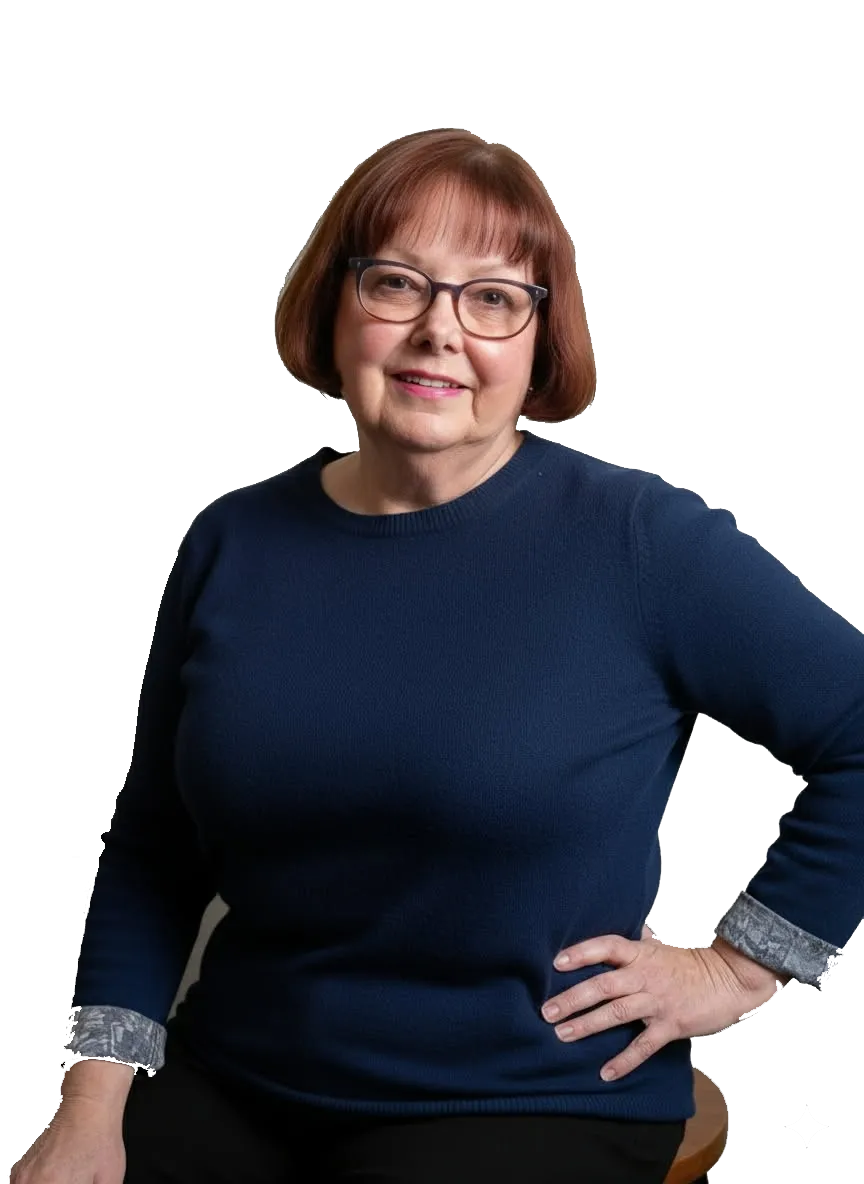
Some stories refuse to stay buried. They live in the marrow of memory, surfacing decades later in quiet moments, a swing set in an empty park, a sign at the city limits, a father's hand pulling you away from a stranger who looked just like you.
I Am Your Daughter by Cindy Meadows is one of the most affecting books about social injustice to emerge in recent years. It is a memoir that works on multiple levels: as a coming-of-age story, as a family drama, and as a searing indictment of the quiet, everyday racism that shaped American childhoods in the 1950s and 1960s. Cindy Meadows invites readers into her world through the eyes of a young girl who does not yet have the language for injustice, but who feels its weight nonetheless.
This blog explores how I Am Your Daughter functions as one of the most powerful books about racial segregation, offering a child's-eye view of a society divided by color. It examines why these stories matter, how parents and educators can use such narratives to talk with children about racism, and what her journey from confusion to understanding teaches us about the long arc of racial awakening.
Why Books About Segregation and Social Injustice Matter Today
We live in an era of heightened racial awareness and heightened racial tension. Conversations about systemic racism, housing discrimination, and educational inequality dominate headlines. Yet for many Americans, segregation feels like history. They point to the Civil Rights Movement, the end of Jim Crow, and conclude that the work is done.
Books about social injustice like I Am Your Daughter shatter that illusion. The author shows us that segregation was not just a Southern phenomenon, not just a matter of law, but a lived reality in Northern suburbs like Garden City, Michigan. It was baked into neighborhoods, bank policies, casual remarks, and unspoken rules.\
When Cindy Meadows writes about her father pulling her away from a Black girl on a swing, or reading the sign declaring "Welcome to Garden City Caucasian Race only," she is not describing ancient history. She is describing the world that shaped a generation, and the attitudes that still echo today. For readers seeking books about racial segregation that illuminate this hidden history, her memoir is essential.
Understanding Segregation Through Children's Eyes
What makes I Am Your Daughter such a vital addition to books about racial discrimination is its perspective. She is not an activist or a sociologist. She is a child, innocent, curious, and deeply confused by the contradictions around her.
When she plays with a Black girl at the park, she sees only another child: "We smiled shyly at each other as we pumped our legs. We didn't talk. We just swung back and forth, stealing a glance at each other." The encounter is natural, unforced, and joyful. It is only when her father intervenes, "She is not our kind," that she learns that the world has rules she does not understand.
She captures the bewilderment of a child confronted with adult prejudice: "I felt confused and just sat there eating my lunch. I never saw a Negro girl in our city, and she seemed nice. I wondered why my dad was so mad." This is the power of books about childhood racism; they remind us that racism is not innate. It is taught. It is learned. And it can be unlearned.
How to Talk to Kids About Segregation and Racism
Cindy Meadows' memoir offers a roadmap for parents and educators who want to discuss segregation with children but don't know where to begin. Here are some age-appropriate strategies:
1. Age-Appropriate Ways to Teach Segregation to Young Children
Young children understand fairness, being excluded, being told they can't play, or being treated differently. Start there. Ask: "How would you feel if someone said you couldn't play on the swings because of how you look?" This builds empathy before introducing historical facts. For ages 8–12, excerpt I Am Your Daughter to show how segregation affected real families.
2. Using Picture Books to Discuss Social Injustice
While I Am Your Daughter is for older readers, younger children can explore its themes through picture books showing diverse friendships and gently introducing unfair treatment. After reading, ask: "How did the characters feel? What would you have done? How can we make sure everyone feels included?"\
3. Classroom Activities for Teaching About Segregation
Teachers can use excerpts from I Am Your Daughter to spark discussion. Activities include journaling about exclusion, mapping historical redlining in your city, and role-playing the swing set scene with a different ending. These connect personal experience to historical context, a hallmark of teaching books about social injustice.
Learning Racism at Home
One of the most uncomfortable truths in Cindy Meadows' memoir is that racism is transmitted not through laws or institutions alone, but through families. She learns prejudice at her father's knee.
When she asks about the sign at the city limits, her father explains, "It means only white people like us can live in our city." When she questions him, he tells her not to argue. Later, at a Kmart, her mother shushes her when she tries to ask about a Black family shopping nearby. The message is clear: this is not up for discussion.
She writes: "I didn't know how to make sense of this. I know my parents want to keep us safe and for us to have a lovely home and friends, but why did it need to be with only white people? I thought, don't Negro people have feelings just like us?"
This passage captures the moral dissonance that many children feel when they are taught prejudice by people they love. It is a painful but necessary lesson for readers of memoirs about racial injustice.
The Internal Struggle: A Child's Conscience
Cindy Meadows' story is not just about what she was taught; it is about what she felt. From the beginning, she resists her father's racism. She feels "confused and sad" when he pulls her away from the Black girl at the park. She wonders why she can't talk to Negro people. She notices that the Black family at Kmart is "just like us," children poking at each other, a mother telling them to behave.
She keeps her questions inside because she knows they will not be welcome: "I know not to ask my parents. I thought they might get mad like at the park." This internal struggle is one of the most powerful aspects of the memoir. She is not a passive recipient of her parents' prejudice; she is a moral agent, wrestling with what she has been taught and what she instinctively knows to be true.
For a deeper analysis of her story, read our blog "Childhood Memoir Books: Stories of Growing Up and Family."\
The Church and Segregation
Cindy Meadows' spiritual journey is interwoven with her racial awakening. She attends a Lutheran church, learns about Jesus' love for children, and wonders: "If Jesus loves the little children, why did my parents say we couldn't play with Black children?"
She doesn't find an easy answer. The church she attends is predominantly white. The sermons she hears are about love and forgiveness, but they do not address segregation directly. The disconnect between the gospel's message and her family's racism is one of the quiet tensions of the memoir.
Later, as she grows older, she begins to ask deeper questions: "I learned in church to forgive and to accept what I don't understand, but I'm not ready to do that." This is a crucial moment; she begins to develop her own moral framework, one that may diverge from her parents' and even her church's.
Confronting Injustice: A Child's Growing Awareness
As she matures, her awareness of injustice deepens. She notices that her brother Kris is treated differently, that he is the "golden boy" while she is expected to do chores, cook, and clean. She notices that her guidance counselor steers her toward secretarial work rather than college. She notices that her father's rules are stricter for her than for Kris.
She also notices the racial dynamics of her community. When a new store opens, she sees Black families shopping there and watches her mother's tension. When a friend's father says he wouldn't give loans to Negro families, she files it away as another piece of the puzzle.
These experiences shape her into someone who questions authority, someone who, by the end of the memoir, is ready to confront the abuse in her own home and to begin healing. The connection between personal liberation and social justice is implicit but powerful.
The Legacy of Segregation: Adult Reflections
I Am Your Daughter is not just a childhood story; it is a reflection from adulthood, a look back at the patterns and lessons of a lifetime. The memoir's power lies in its ability to hold both perspectives: the innocence of the child and the wisdom of the adult.
1. Looking Back: Cindy Meadows on Growing Up Segregated
Cindy Meadows shows segregation as a lived experience with lasting psychological effects. She internalizes "keep her distance" from people of color and learns to "smile and go on even when she felt hurt or sad inside." Segregation was reinforced through silence; questions were dismissed, and she was told to "respect her elders."\
2. What the Little Girl on the Swing Taught Me
The park encounter, the Black girl on the swing, the brief connection, and the father's swift intervention is one of the memoir's most poignant moments. Cindy Meadows writes: "I turned to wave at the girl. He rushed me away." That little girl was just a child, like her. Adult prejudice destroyed what could have been a friendship.
3. From Confusion to Understanding
By the end, she hasn't resolved all her questions. She is young, married, working, building a life. But she has begun trusting her instincts, questioning authority, and seeking healing. The title I Am Your Daughter is both a declaration and a plea, the voice of a girl who will not be silenced.
For more reading, explore our blog "Books About Girlhood: Growing Up with Family Expectations"
Conclusion
I Am Your Daughter by Cindy Meadows is more than a memoir. It is a witness to history, a testament to resilience, and a call to action. As one of the most compelling books about social injustice, it reminds us that segregation was not just a matter of law; it was a matter of the heart. It was taught at kitchen tables, enforced in neighborhoods, and internalized by children who had no language for what they were seeing.
For readers seeking the best social injustice books 2026, her story is essential. It is also a reminder that the work of racial healing is not finished. It begins with stories like this one, stories that invite us to see the world through a child's eyes, to feel the weight of injustice, and to find the courage to ask: What can I do differently?
Frequently Asked Questions
What happened when Cindy Meadows tried to play on the swings beside a Black girl at the park?
She and the Black girl swung together, smiling and stealing glances, sharing a brief moment of connection. Then her father rushed over, grabbed her hand, and pulled her away, telling her, "She is not our kind."
What did the "Caucasian Race Only" welcome sign make Cindy Meadows question about Garden City?
The sign made her question why only white people could live in her city. When her father explained it meant "only white people like us," she felt confused and sad, wondering why she couldn't talk to Black people and whether they had feelings just like her.\
How did Cindy Meadows' mother behave when they encountered Black families at Kmart?
Her mother became tense. She grabbed her hand, picked up three items, and wheeled the cart to checkout.
What did Cindy Meadows overhear about a bank refusing housing loans to Black families?
At a friend's house, she heard her friend's father say that the bank where he worked would not give loans to Negro families for houses. She knew better than to say anything to her elders, but the comment stayed with her.
Why did Cindy Meadows hesitate to ask adults about racial segregation, and what happened when she questioned her father?
She hesitated because she feared adults would get mad, as they had at the park. When she questioned her father about Black people, he said they were "not like us." When she said, "But Dad," he cut her off with "No buts."
Cindy Meadows' story doesn't end here. To discover how she finds her voice and herself, grab your copy of I Am Your Daughter on Amazon now.